- Backstage
Two Brothers at the Olympics
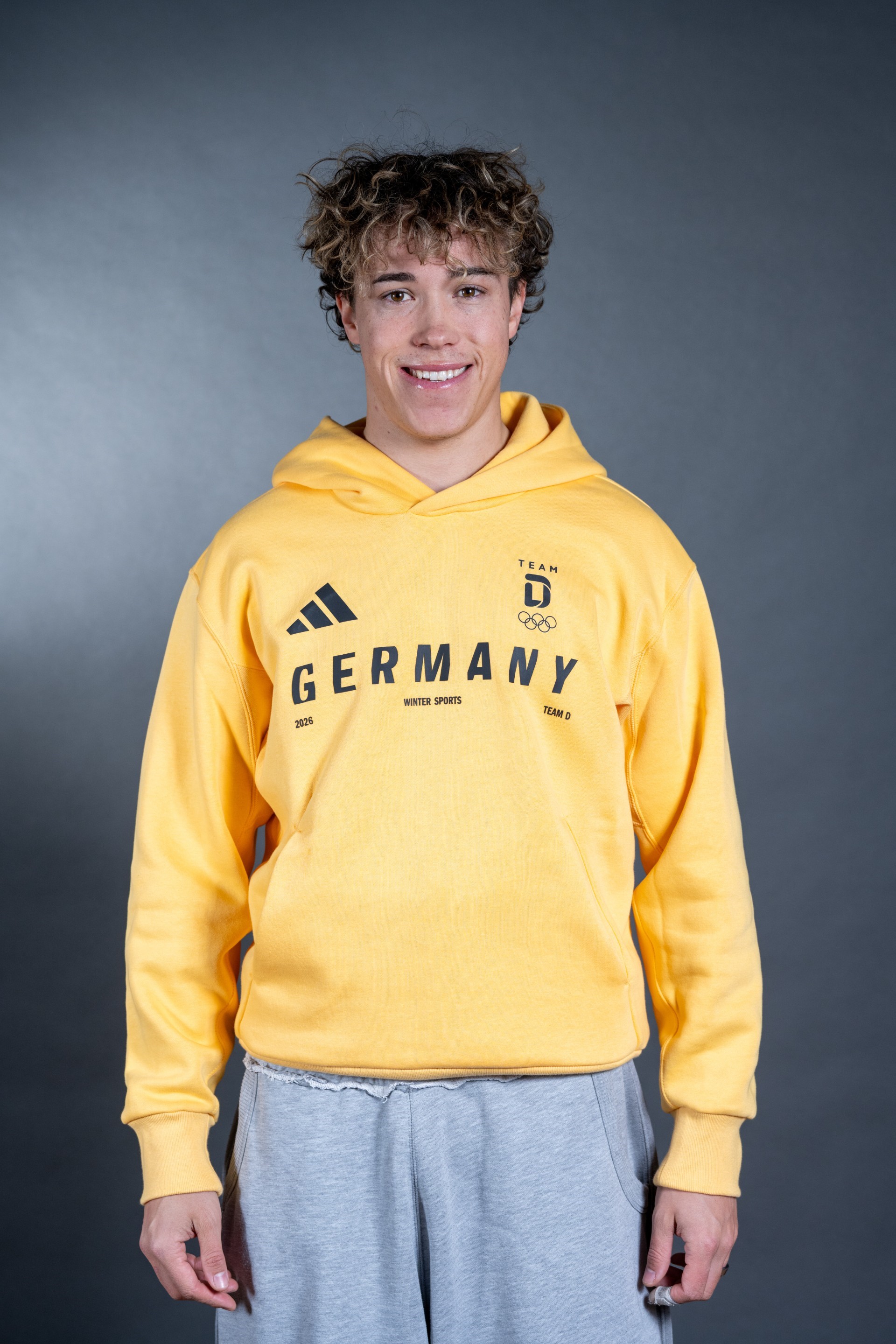
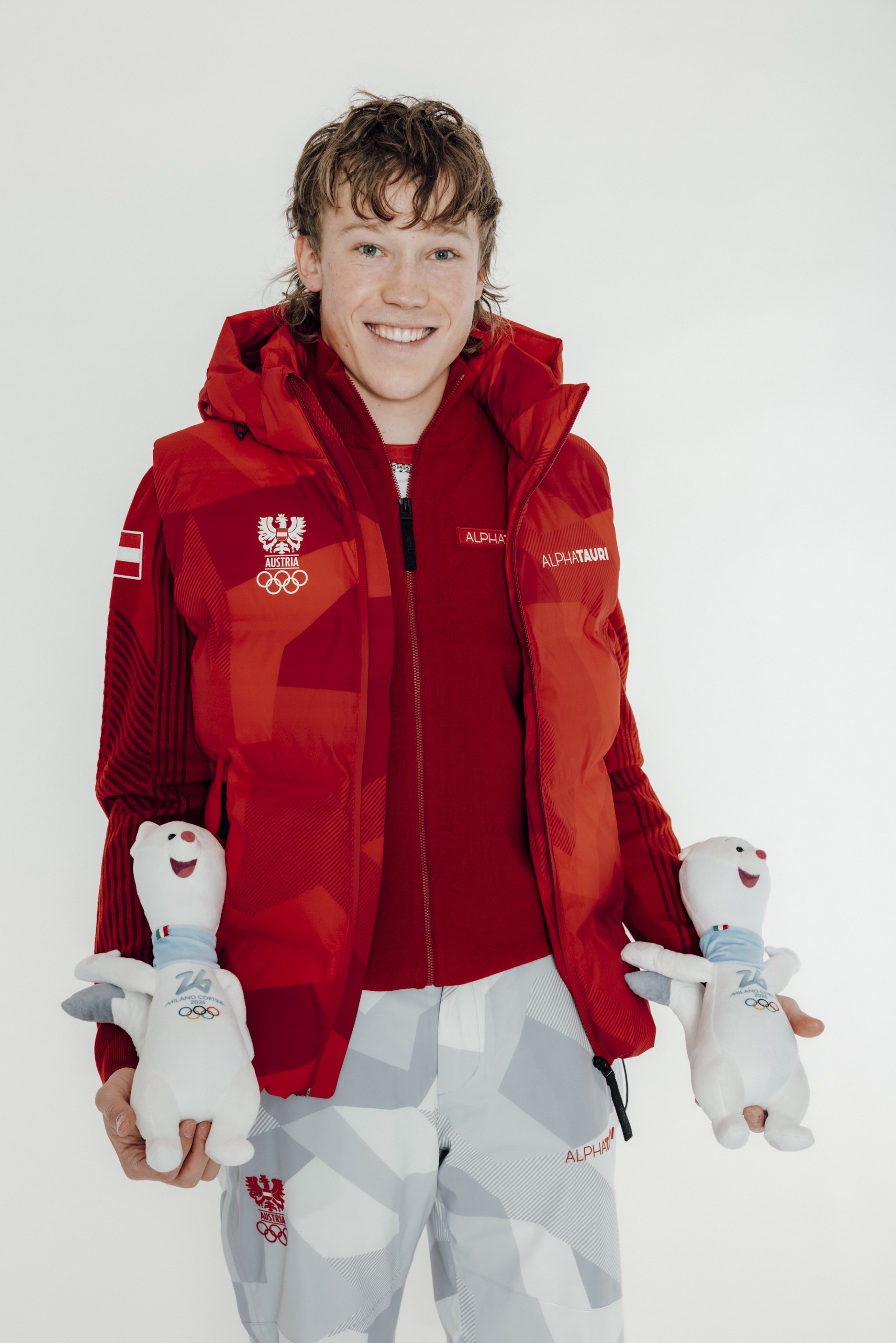
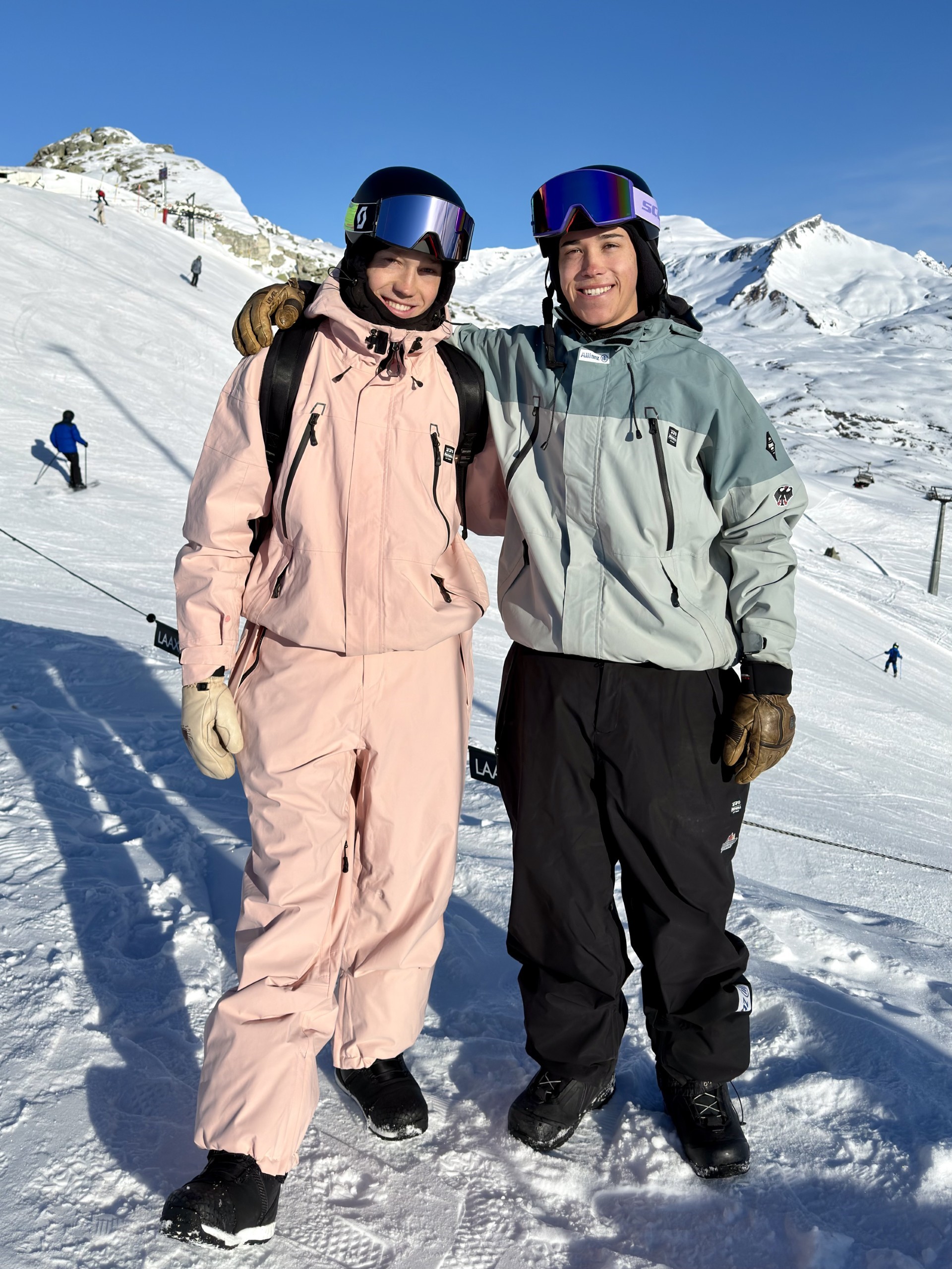
Since February 1, it’s official: snowboarders Florian and Christoph Lechner will compete in the halfpipe at the Olympic Winter Games. Florian (20) will represent Austria, while Christoph (25) will start for Germany. Shortly before their departure to Livigno, the two met once more for a joint training session and spoke about their shared passion for the sport, which they discovered in their home of Saalbach Hinterglemm.
You were born and raised in Germany, but later moved to Saalbach Hinterglemm together with your parents. How did you find your way into professional snowboarding?
Christoph: Our parents used to own a holiday apartment in Hinterglemm, and as kids we were basically on the mountain every weekend from Friday to Sunday. We started out skiing and also trained with the Saalbach Ski Club. That meant we raced a lot, and in the evenings we were often hanging out in the night park in Hinterglemm.
For me, the decision back then came quite spontaneously after a school competition. I got the chance to do a trial training session, really liked it, and I think I did pretty well—because I was then given the opportunity to join the German junior national team straight away. In 2016, I was able to compete at the Youth Olympic Games in Lillehammer with the German Ski Association (DSV). Unfortunately, the 2022 Olympics didn’t work out, but now we’re finally competing together as brothers at our first Olympic Games in Milano-Cortina.
Florian: Originally, the idea was that we would become ski racers. But we both also snowboarded, and eventually—also because of our height and weight—we decided to go for snowboard freestyle. In the end, we moved to Hinterglemm with our parents. Christoph attended the sports boarding school in Berchtesgaden, Germany, and I went to school in Saalfelden, Salzburg. That’s where we really focused on snowboard halfpipe.
Since I grew up and went to school in Austria, my heart beats more for Austria. That’s why I decided to take Austrian citizenship and asked the Austrian Ski Federation (ÖSV) whether they would be willing to set up a halfpipe team for me, as there hadn’t been one before—and they said yes.
What makes the halfpipe discipline so appealing to you?
Christoph: Getting into the halfpipe is quite difficult at the beginning. You really have to dare to go for it and reach the height you need so that all the tricks actually work. The combination of technical skill and style that you need in the transition and on the flat in the halfpipe feels incredibly cool.
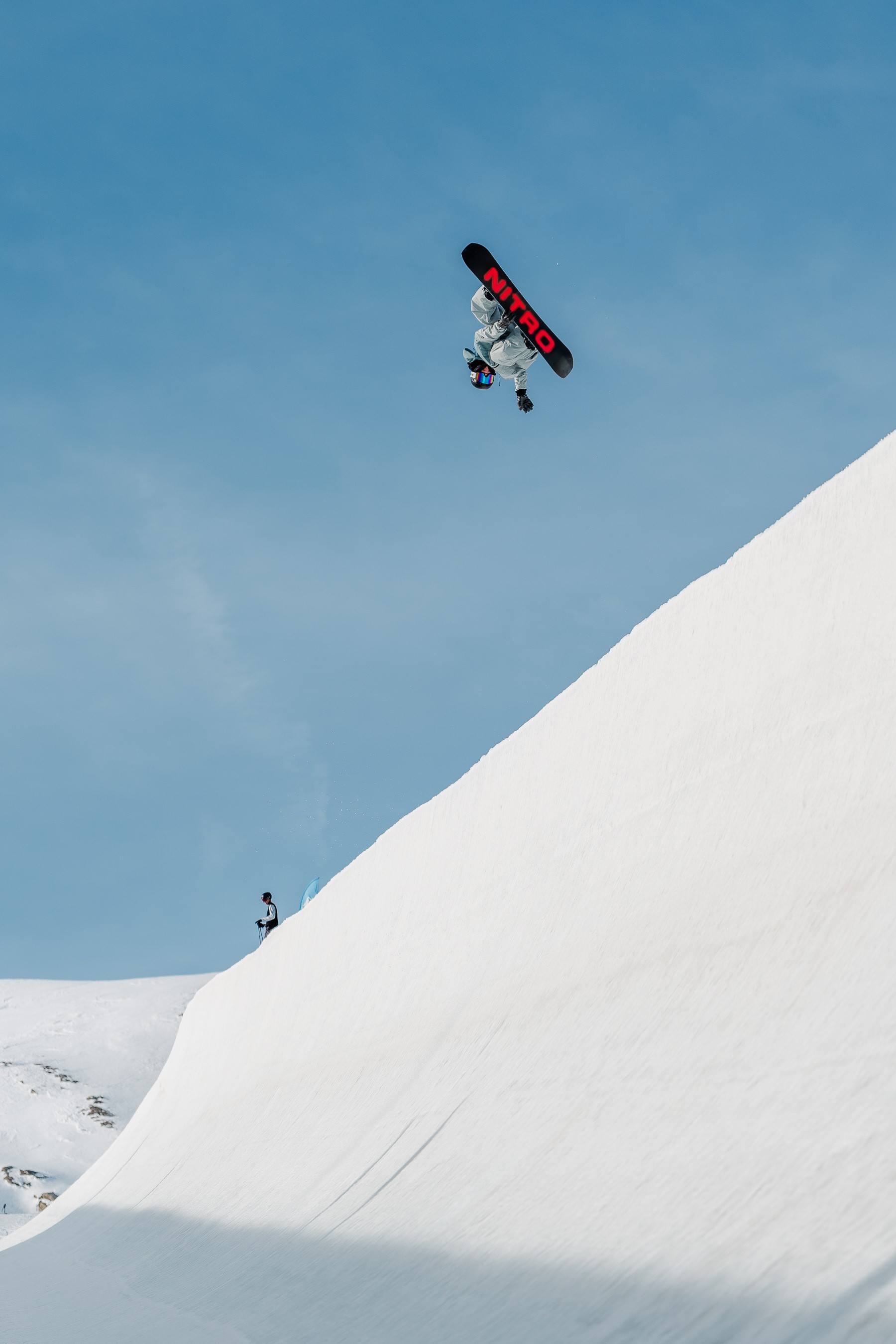
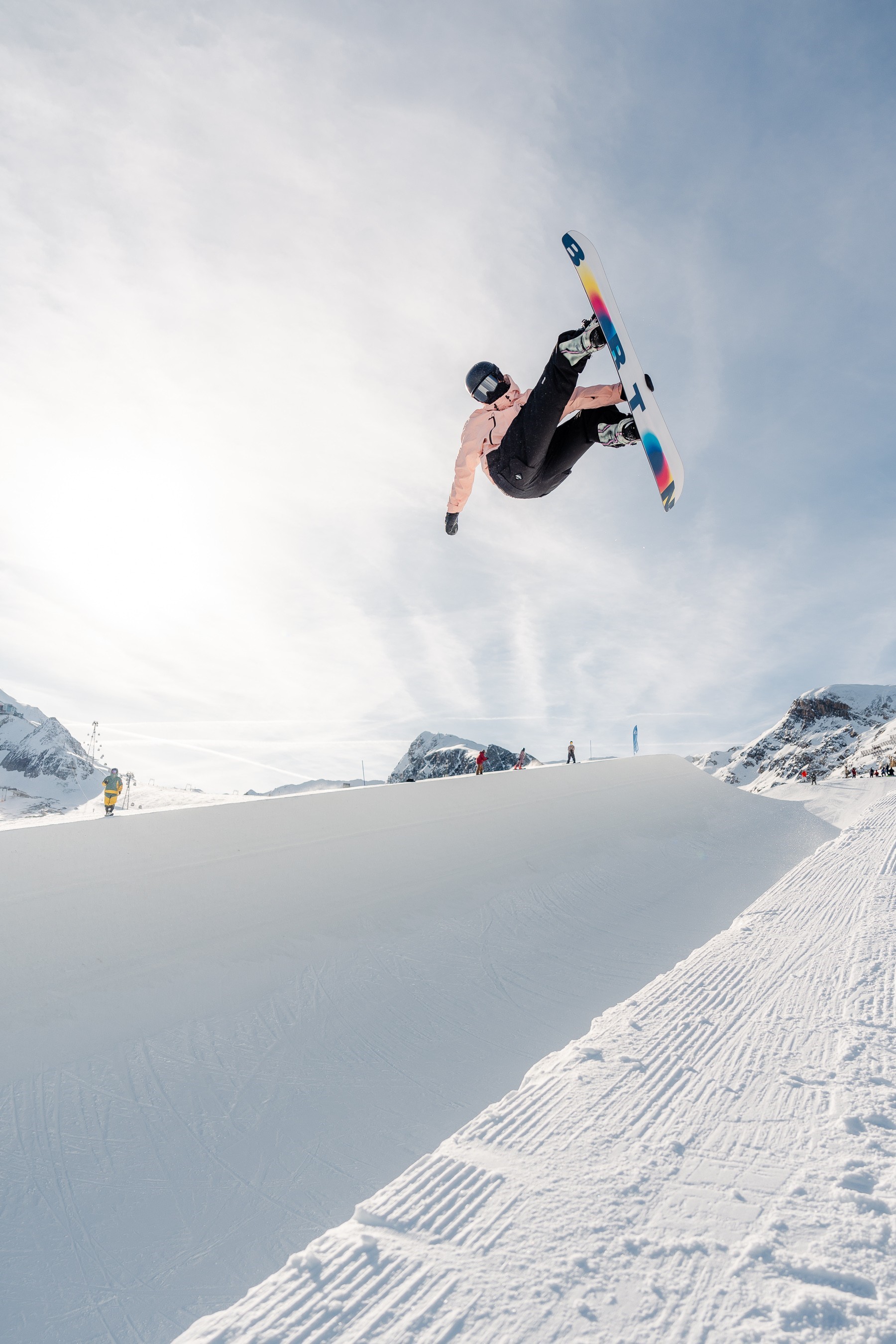
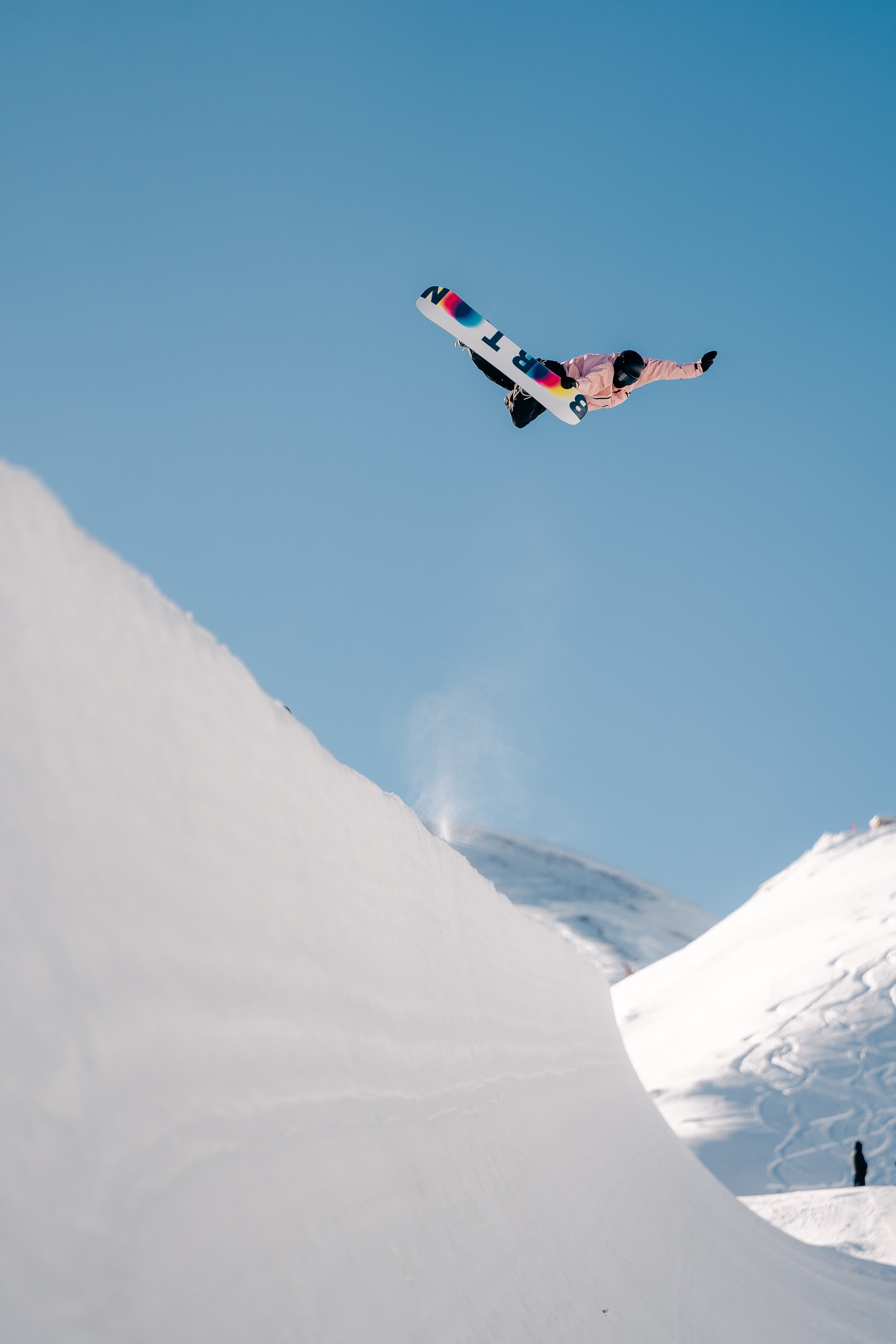
Florian: Yes, it’s always an amazing feeling. The halfpipe itself is already about six to seven meters high, and then we jump another four to five meters above that. It’s a feeling of freedom, I’d say—and of course a huge adrenaline rush when you look down and think, where am I right now?
It also sounds spectacular for spectators. How do you train for the halfpipe throughout the year?
Christoph: In summer, we train on dry slope facilities with airbag landings and also on trampolines—so completely without snow. In autumn, we move on to performance camps in Switzerland and on the Kitzsteinhorn, and then the World Cup season starts.
Florian: We start training on mats and airbags in summer, and in spring and autumn we learn the tricks on snow. In winter, it’s all about solidifying the tricks and putting together different runs for the halfpipe.
The snowpark in Livigno was newly built especially for the Olympics. Have you already tried the halfpipe there, or is it all completely new for you?
Christoph: Unfortunately, we haven’t tried it yet, because it was only finished two weeks ago. But Albert “Alli” Zehetner is the shaper of the Olympic halfpipe. He’s from Kaprun, which is very close to where we’re from, and he also builds the halfpipe on the Kitzsteinhorn and in the Secret Garden in China, where we train as well. And the pipes he builds are the best. That’s why we’re not stressed about it—we know it’s going to be one of the best halfpipes out there.
How can you tell whether a halfpipe is good or not so good?
Florian: If a pipe isn’t prepared well, it often feels quite bumpy. That means we have to leave some jumps more open and use less edge on takeoff—which is difficult, because you never quite know where you’re going to pop out.
Tomorrow you’re already heading to Livigno, where your Olympic competitions will take place. Is the pressure increasing?
Christoph: I’d say the excitement is increasing. You slowly start to realize that it’s about to begin. But for now, I’m still focusing on training and trying not to let the Olympic vibe get to me too much. I just want to show good snowboarding, land my run, and enjoy everything else that comes with it.
Florian: I’m really looking forward to the Olympic Games. Since it’s my first time, I’m trying to simply enjoy it.
It’s quite unique that you’ll be competing as brothers at the same time, in the same discipline, but for two different nations. How does that feel?
Christoph: Well, I think a lot has to go right for you to end up standing at the start line like this. So it’s really cool that we both made it. It doesn’t really get any better than that. And honestly, whether we’re starting for Austria or Germany doesn’t matter much to us. One advantage is that we’re not working with the same coaches. That way, we get different input and can also coach each other a bit.
Florian: Yes, we’re both really happy, because years of training have finally paid off. You’re just incredibly glad to have made it. And it’s a great story: two brothers, two different nations—that’s pretty amazing. The good thing is that we’re not taking spots away from each other, and the rankings don’t make any difference in that regard.
Will your family and friends from Saalbach Hinterglemm be coming to the Olympics?
Florian: Yes, our parents and a few friends will travel from Hinterglemm to Livigno to support us. Many people we know will also be watching online. After the season, we’ll be back on the mountain together again.
When you go snowboarding in your free time, where do you like to ride the most?
Christoph: I’d say our favorite area is the Hochalm in Hinterglemm.
Florian: Yes, from home we’re at the Reiterkogel cable car in just five minutes and can head straight over to the Hochalm. The slopes there are great, and it’s also really awesome when there’s fresh powder.
So you don’t always need a park to have a good day on the mountain?
Florian: No, absolutely not. And in summer, we also love being in the mountains—just on bikes instead.
Christoph: Right before the Olympics, we had to be a bit careful with downhill riding, but we spent a lot of time mountain biking in Leogang and Saalbach Hinterglemm. And next summer, we’ll be able to go all out again.
For now, though, we wish you the very best of luck in the snowboard halfpipe competitions at the Olympics. Saalbach Hinterglemm—and our German guests as well—will definitely be keeping their fingers crossed for you.