- Traditions
Ranggeln – the oldest martial art in the Alpine region
The current exhibition at the Saalbach Heritage Museum is all about strength, bravery & tradition.
This year’s special exhibition at the Saalbach Heritage Museum once again focuses on Alpine traditions and inherited knowledge. Under the theme: “Ranggeln – the oldest martial art in the Alpine region, part of UNESCO’s Intangible Cultural Heritage since 2010 & the Saalbach Ranggeln Club” the historic rooms are transformed into informative exhibition spaces. Where does the word “Haogmoar” come from? What are the origins of this martial art, already practiced by the Celts? And why is “Schneid” still such an important concept on the Hundstein mountain today? Visitors can now discover the answers to these questions and much more.
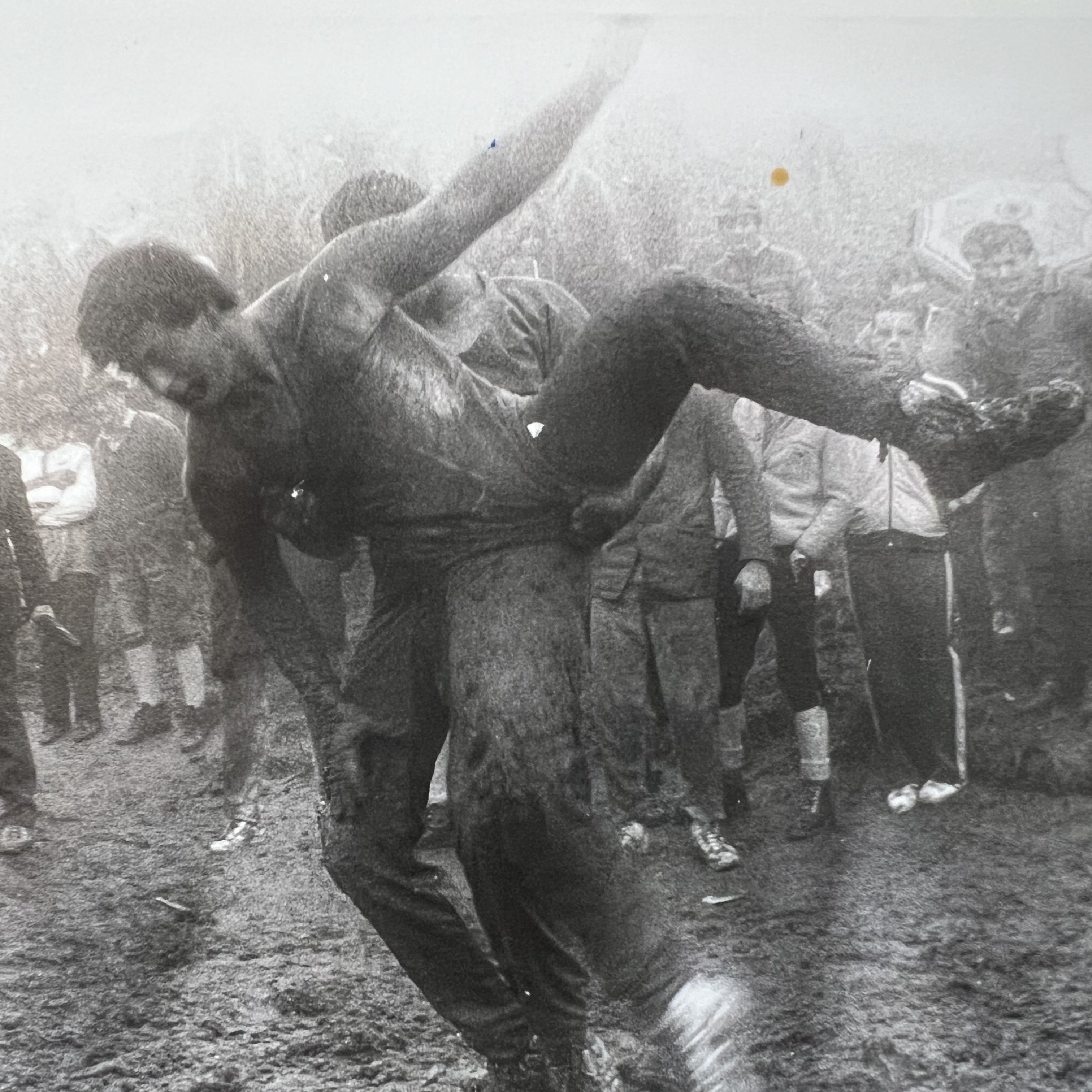
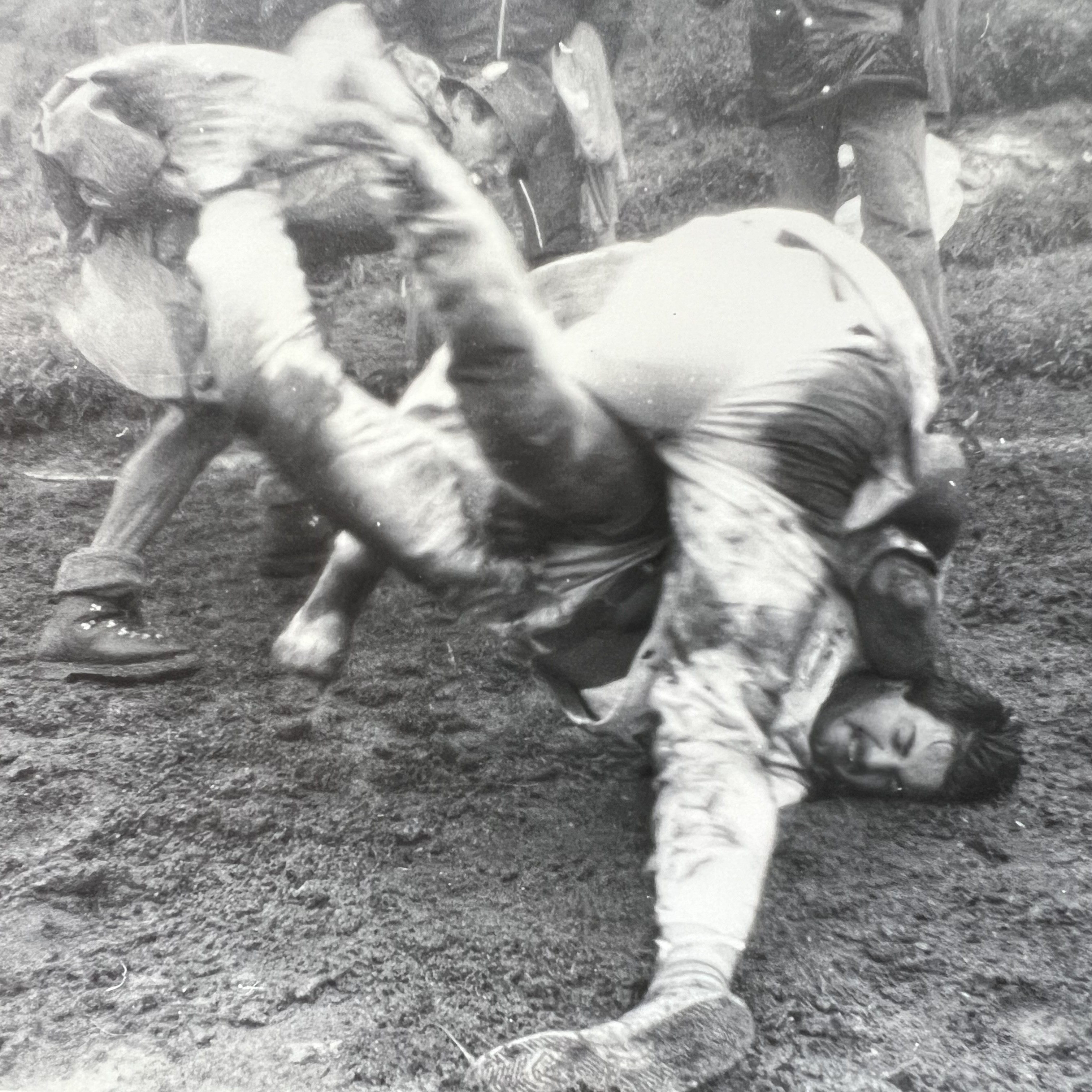
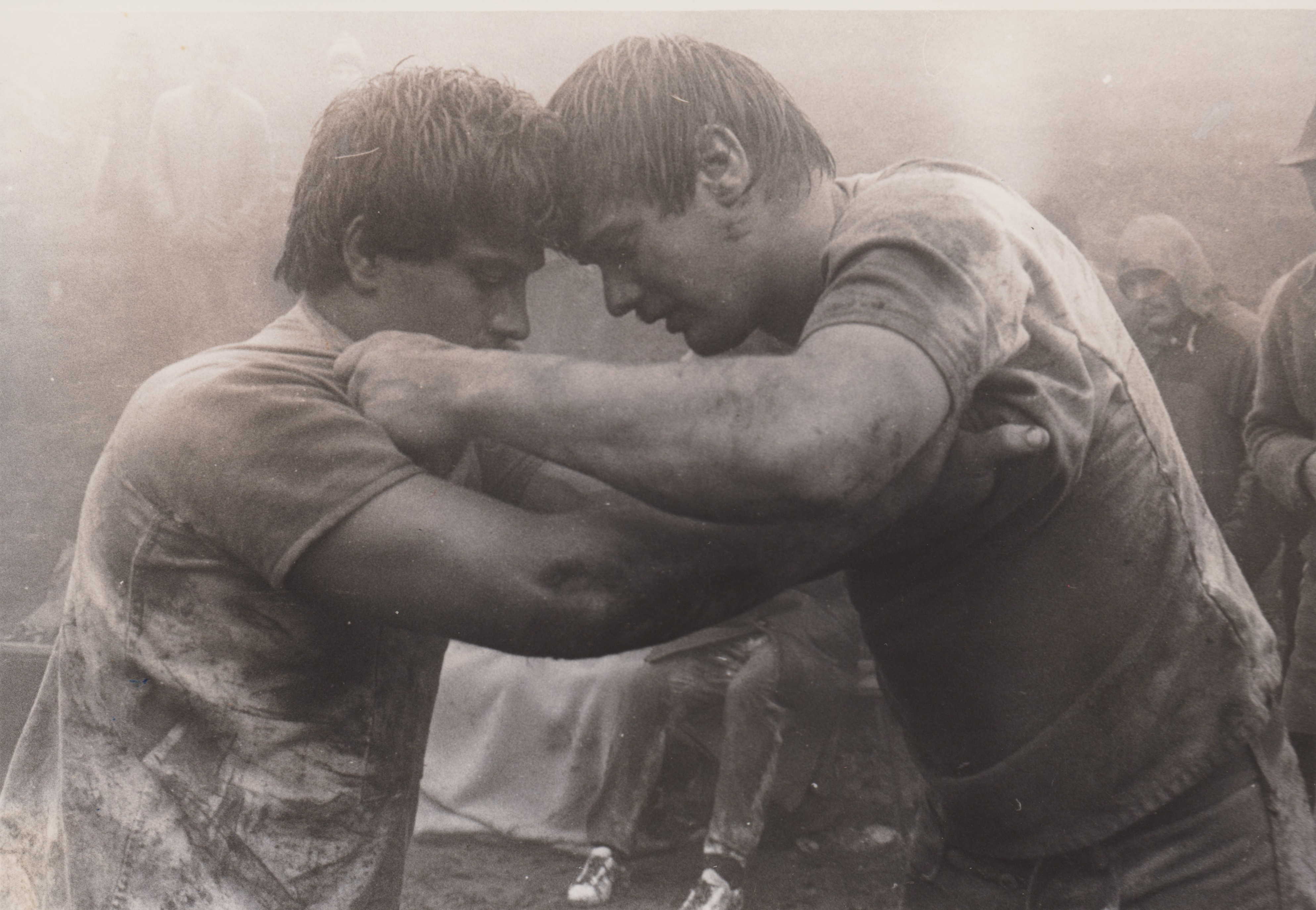
Ranggeln – the oldest martial art in the Alpine region
Ranggeln on the Hundstein mountain has been part of UNESCO’s Intangible Cultural Heritage since 2010. The so-called Hundstein Edict dates back to 1518 and confirms the regular wrestling competitions held on the summit of this distinctive mountain every year on St. Jacob’s Day — a tradition that continues to this day. In the document, Leonhard von Keutschach, Archbishop of Salzburg, instructs Sigmund Graf zu Schernberg not to set the prize money too high, as the official “Hosenrecken” was regularly followed by arguments, disputes, and fights. A reproduction of the edict is displayed in the exhibition.
However, the origins of this martial art most likely go back much further. Around 2,500 years ago, the Celts had already settled large parts of Europe. The oldest evidence of Celtic wrestlers in Austria can be found on a sword sheath from a Hallstatt grave (400–350 BC), depicting two men wrestling on the ground. The Celtic style of wrestling has survived in its original form throughout Western Europe in various regional styles. In the Alpine region, one of these forms is Ranggeln.
Local historian Ilka Peter demonstrated in her book “Das Ranggeln im Pinzgau” that Ranggeln was not only a sport of the rural population, but also practiced by knights. She analyzed texts and illustrations from Albrecht Dürer’s “Fecht und Ringbuch” (Book of Fencing and Wrestling). Some of the grips and throws used in Ranggeln today are applied in exactly the same way as they were at least 600 years ago.
Much of the knowledge we have today has been passed down orally or comes from the writings of various folklorists, including:
- Günther Heim: Hundstoa Ranggeln – Myth, Cult, Tradition
- Ilka Peter: Ranggeln in the Pinzgau and Related Martial Traditions in Other Alpine Regions
- Josef Giezinger: Ranggeln as a Rural Sporting Tradition in the State of Salzburg
- Conrad Nusko: Ranggeln on the Hundstoa
It is believed that the “Schneidfeder” (“feather of courage”), which used to be awarded as the main prize in Ranggeln, originates from the expression:
“Host a Schneid?” – “Have you got the courage?”
(Schneid = courage / determination / strength)
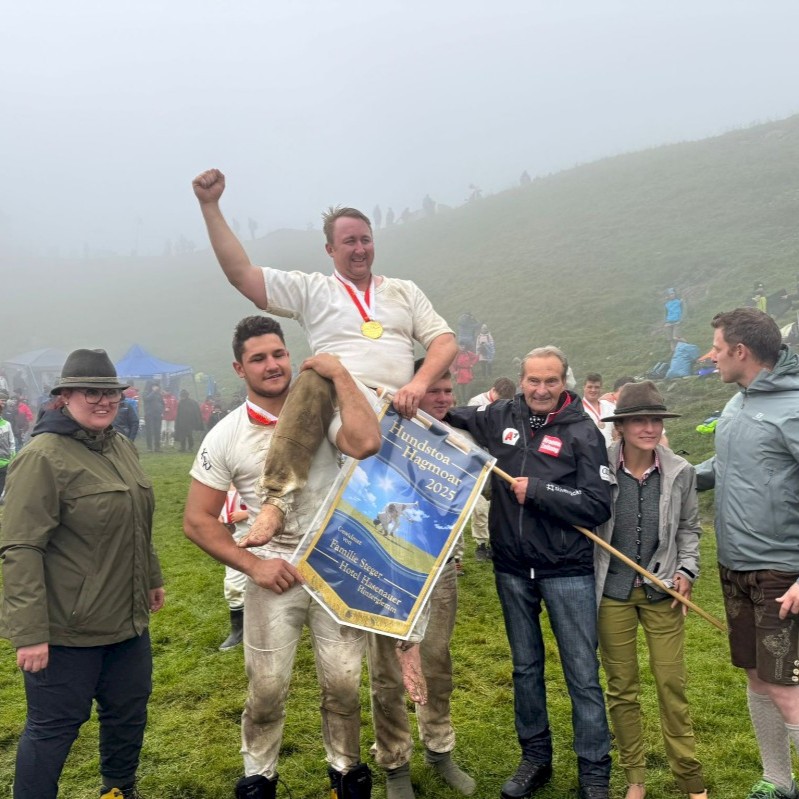
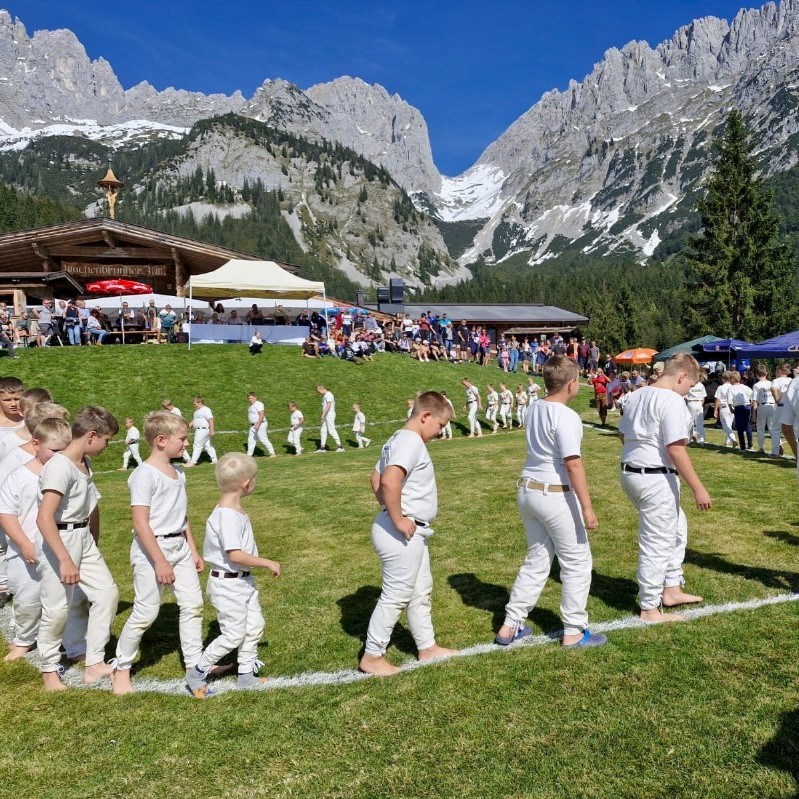
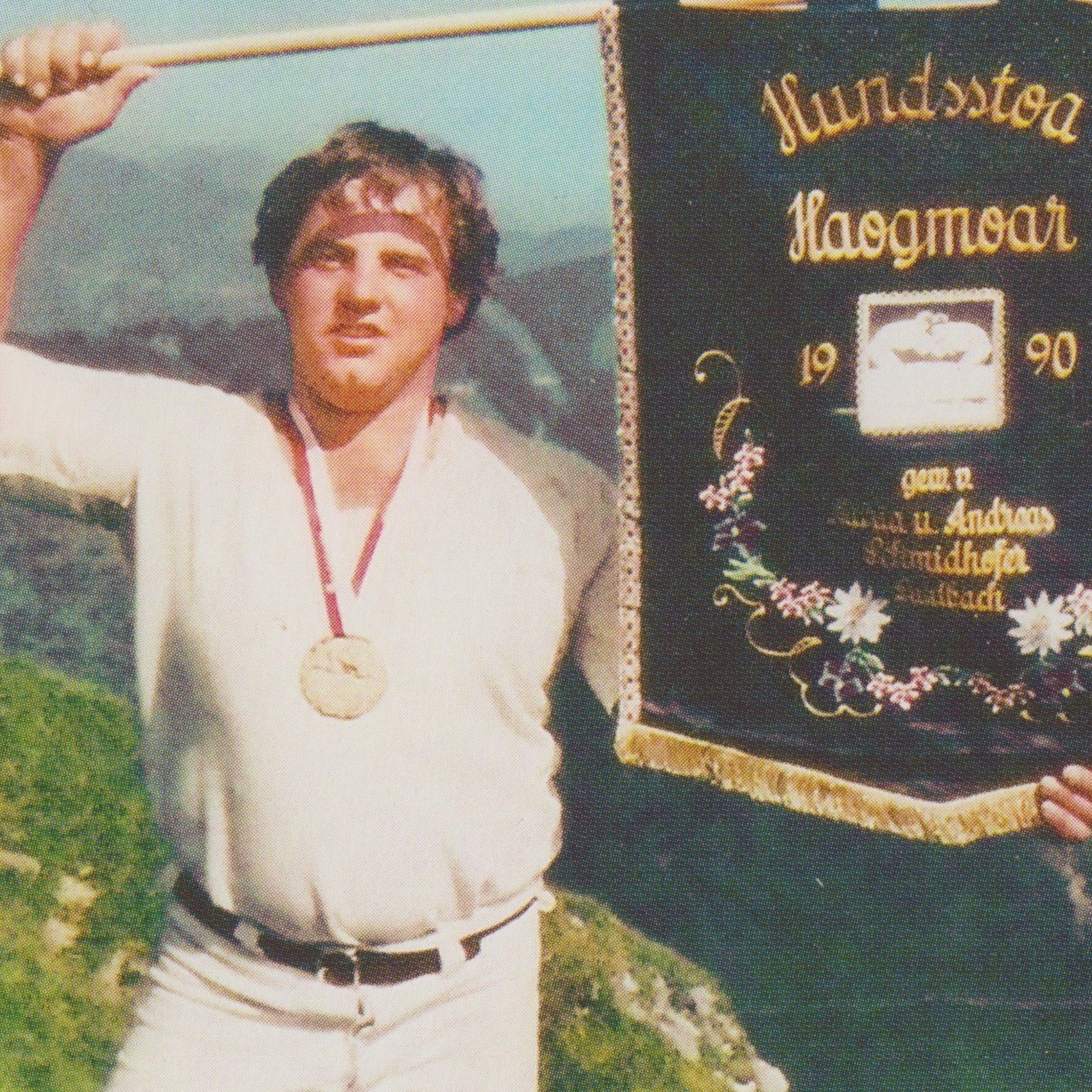
The Saalbach Ranggeln Club
Although Ranggeln had always been well known and popular in the valley, the sport was not officially organized in a club in Saalbach until the 1980s. When top wrestler Hans Struber moved to the Glemmtal valley in 1967, Ranggeln training began at the Wiesern primary school. Thanks to the tireless commitment of many enthusiastic supporters of the sport, Ranggeln became increasingly popular throughout the valley, allowing regular training sessions to take place. In addition, for many years private carpooling arrangements were organized so that young wrestlers in particular could participate in competitions across the entire Alpine region.
The club was officially founded in 1980. For the current exhibition, the founding members have gathered together once again.
The Saalbach wrestlers have always enjoyed a strong reputation and have produced the Hundstoa-Haogmoar champion seven times already. The current Hundstein champion, Christopher Kendler, also comes from the Glemmtal valley. The 2026 season has likewise started successfully — the team secured the Salzburg Team Championship title in Taxenbach!
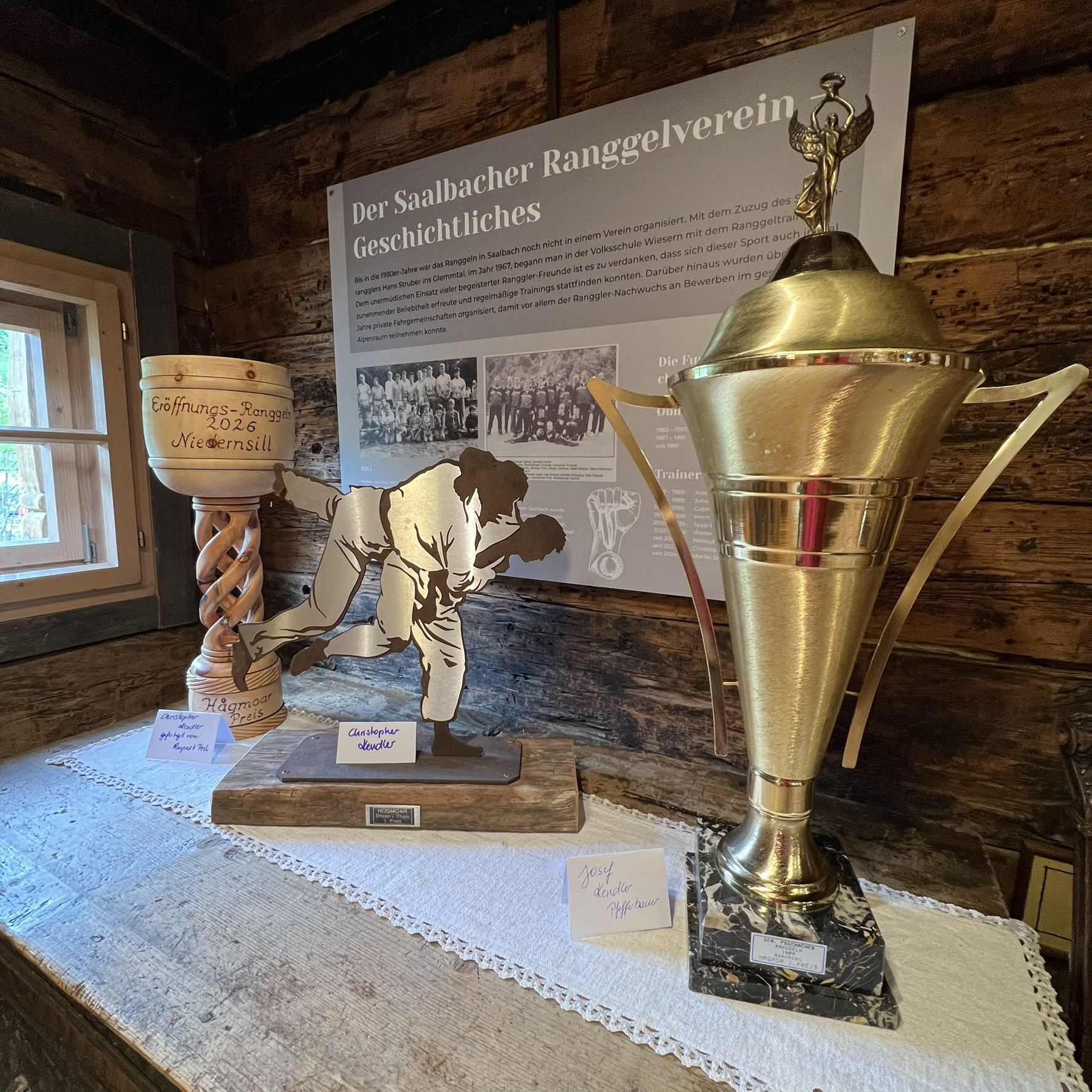
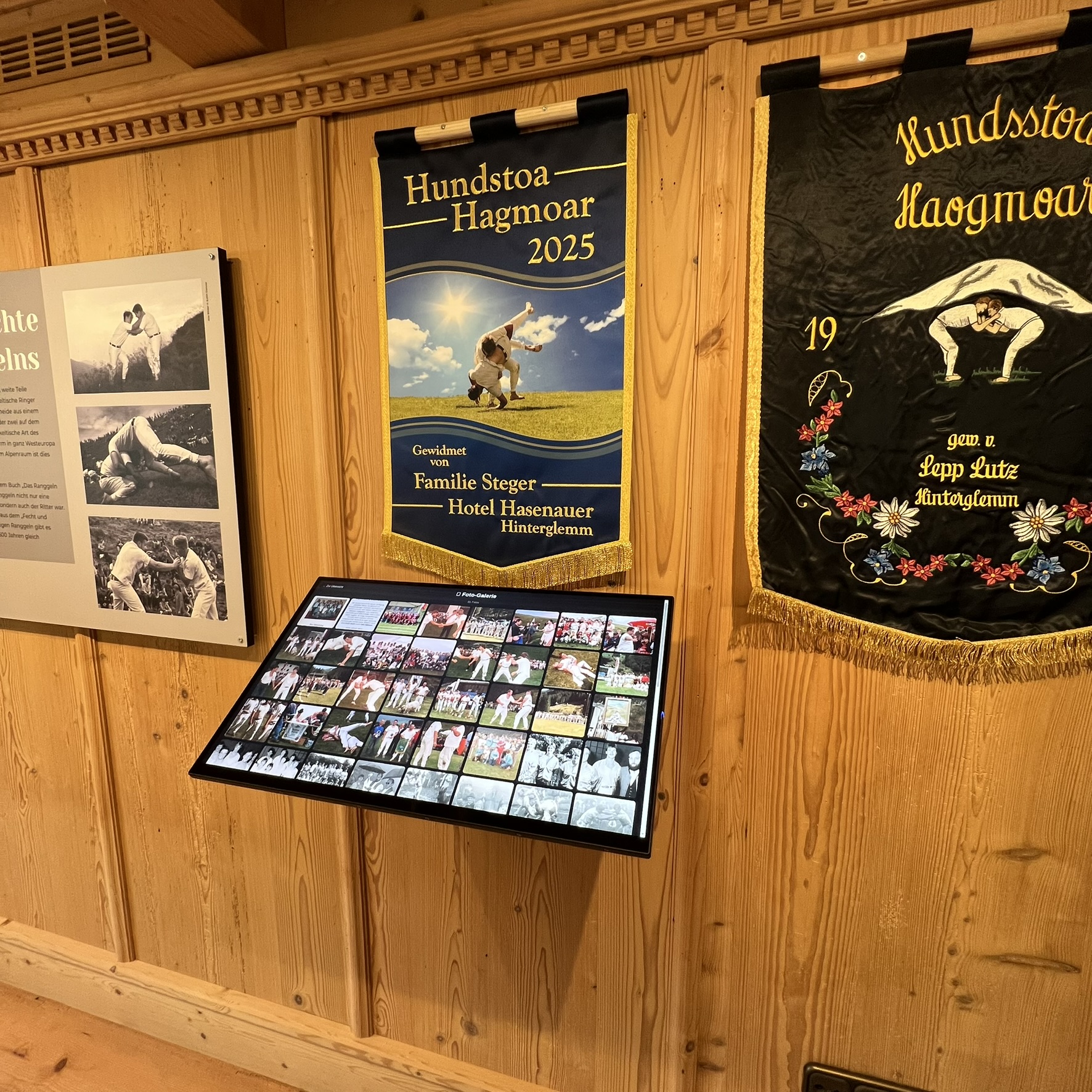
An Exhibition You Can Truly Experience
At first glance, one might think that countless hours of hard work went into creating the exhibition. But that wasn’t really the case. The concept was developed during relaxed afternoons over coffee and Gugelhupf cake around the kitchen table at the Heritage Museum. Stories were shared, expert discussions held, and together the team explored old photographs and newspaper articles from private archives.
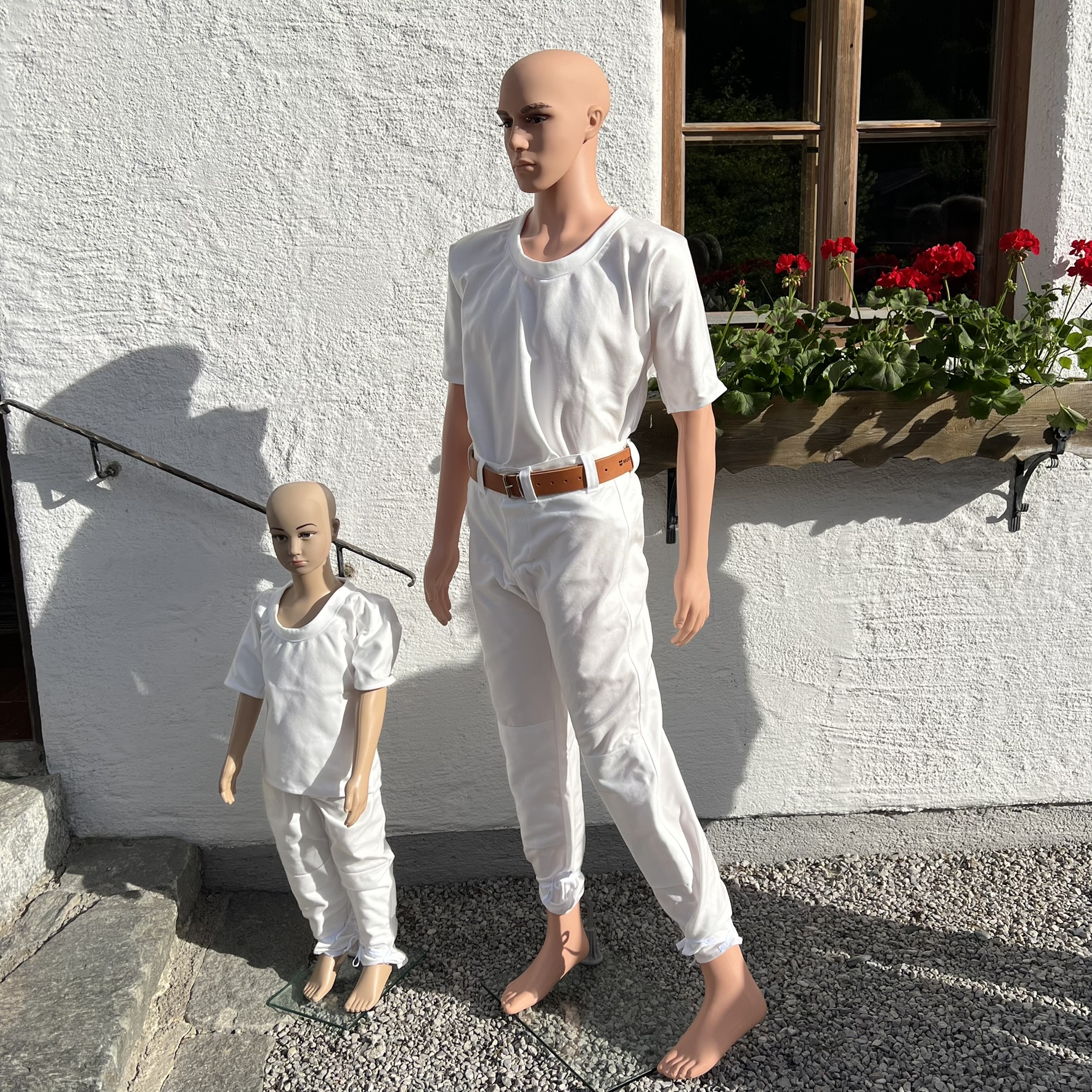
It quickly became clear that the exhibition should feel lively and interactive. In addition to the creatively designed display panels featuring images from past and present, QR codes lead visitors to video footage of Ranggeln events and wrestling throws. Life-sized figures wear the traditional Ranggeln clothing. The white “Pfoad” shirt and trousers are made from durable tear-resistant fabric woven in specialized textile mills.
Additional highlights include the highly coveted Hundstein flags, generously provided by local wrestlers who have won the famous titles. Visitors can also explore fascinating photographs from decades of Ranggeln club life in the valley via an interactive touchscreen display.
Additional Exhibition Topics
- Origins and meanings of names
- More about the Saalbach Ranggeln Club
- The Myth of the Hundstein
- Historical background
- Basic rules, throws & competitions
- Prizes & trophies – impressive Alpine craftsmanship
The exhibition officially opened on May 21 in an intimate setting. Former champions and Hundstoa-Haogmoar titleholders, active and retired wrestlers, as well as invited guests from sports clubs and politics, enjoyed a relaxed evening filled with stories about their shared passion for martial arts. Wrestler and dialect poet Hansjörg Voithofer entertained the guests with stories and poems from his books.
The exhibition can now be visited during the opening hours of the Heritage Museum (Tuesdays, Wednesdays, and Thursdays from 1:00 pm to 5:00 pm). At the same time, the Ski Museum presents impressions from the valley’s World Championship history. Admission is free with the JOKER CARD!